Why Automation Alone Doesn't Improve Manufacturing Performance
Manufacturing leaders have invested heavily in automation over the last decade.
Robotics. Machine vision. Artificial intelligence. Industrial IoT. Automated production systems.
Yet many factories continue to struggle with recurring operational problems.
Equipment issues remain unresolved. Corrective actions stay open. Inspection findings disappear into spreadsheets. Work orders experience delays. Audit preparation remains stressful.
The reason is surprisingly simple. Most operational inefficiencies are not caused by a lack of automation. They are caused by a lack of visibility.
Many organizations successfully automate individual processes while failing to connect the workflows that drive operational performance. As a result, issues are identified quickly but resolved slowly.
This is where the conversation around robotics process automation in software development, machine vision, and intelligent automation needs to evolve. Automation is valuable, but automation alone is not enough.
Most Manufacturing Delays Aren't Caused by Machines
When operational issues occur, many organizations immediately look at equipment, production systems, or technology. However, the root cause often lies elsewhere.
Consider a common manufacturing scenario. A quality inspector identifies recurring defects during a routine inspection. Photos are captured. The issue is documented. A report is submitted. A maintenance request is generated. The production team is informed. At this point, everything appears to be working correctly.
Yet two weeks later, defect rates continue increasing. Why?
Because the issue was identified but never effectively tracked through to resolution. No one lacked effort. No one ignored the problem. The workflow simply lost visibility.
The challenge was not identifying the issue. The challenge was ensuring ownership, follow-up, corrective action, and closure. This is a common operational reality across manufacturing facilities worldwide.
The Real Problem Is Workflow Fragmentation
Modern manufacturing environments generate enormous volumes of operational data every day. Production systems generate output data. Inspection teams generate quality reports. Maintenance departments generate work orders. Compliance teams generate audit records. Asset management systems generate equipment histories. Enterprise software generates performance reports.
The problem is not collecting information. The problem is connecting information.
Without connected workflows, organizations often experience:
- Inspection findings stored separately from maintenance records
- Work orders disconnected from inspection observations
- Corrective actions tracked manually
- Asset histories spread across multiple systems
- Audit documentation requiring manual preparation
- Delayed communication between departments
- Limited visibility into issue resolution status
As operations become more complex, these visibility gaps become increasingly expensive.
Where Robotics Process Automation Fits
Robotics Process Automation (RPA) focuses on automating repetitive digital tasks. Within manufacturing environments, robotic process automation in software development can automate:
- Inspection reporting
- Maintenance notifications
- Work order generation
- Compliance documentation
- Production reporting
- ERP updates
- Inventory synchronization
- Corrective action workflows
These automations reduce manual effort and improve consistency. However, automation alone does not guarantee operational improvement. A work order created automatically still requires visibility. A maintenance request generated by software still requires ownership. A corrective action still requires follow-through.
Without workflow transparency, automated processes can simply move problems faster. The true value of RPA emerges when automation supports visibility rather than replacing it.
How Machine Vision Improves Detection
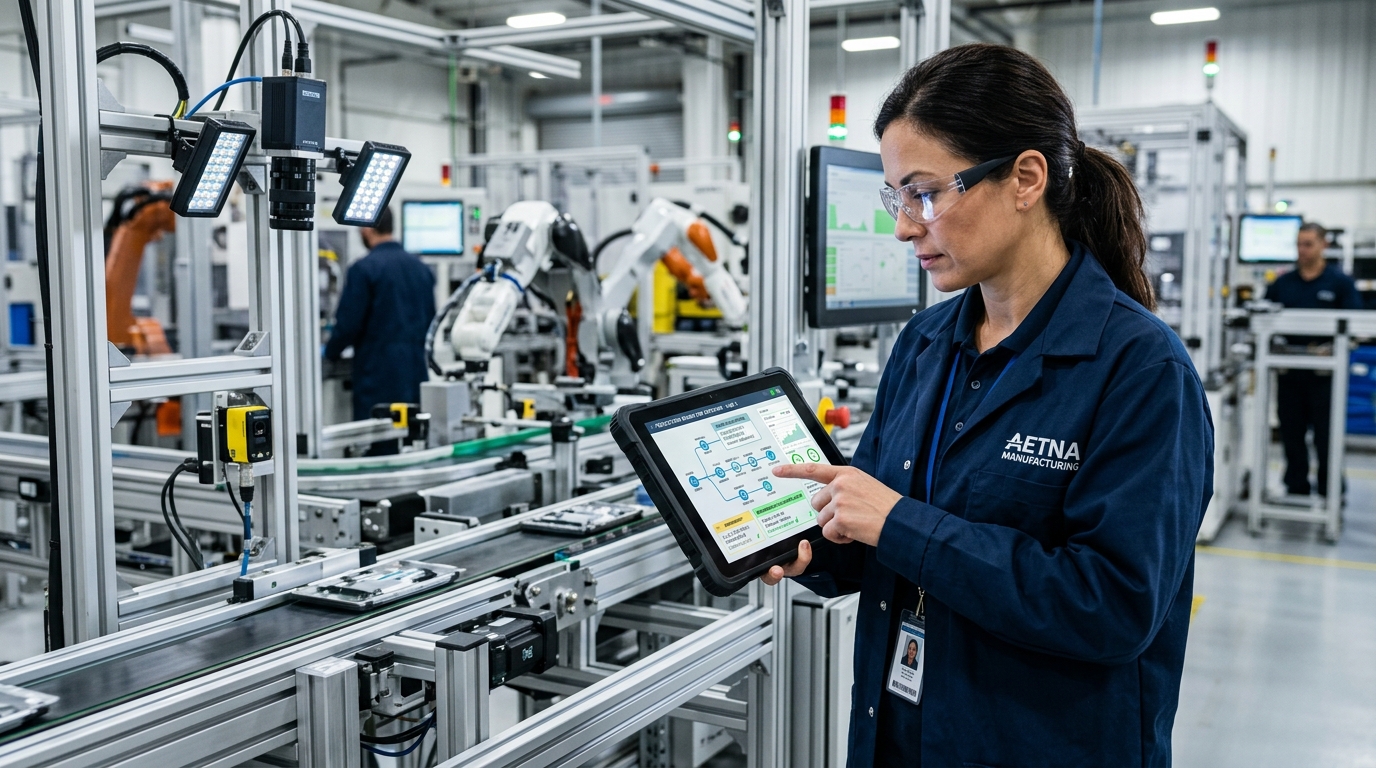
Machine vision systems have become increasingly important within modern manufacturing operations. Using cameras, sensors, and computer vision in manufacturing, organizations can automatically inspect products and identify defects that may be difficult for human inspectors to detect consistently. Machine vision supports:
- Automated quality inspection
- Defect detection
- Measurement verification
- Product consistency checks
- Packaging validation
- Component verification
This technology significantly improves detection capabilities. But detection is only one part of operational performance. A machine vision system may identify a defect instantly. What happens next matters even more.
If the issue remains disconnected from maintenance teams, quality teams, or operational leadership, the defect may continue impacting production despite being detected. Technology can identify problems. Connected workflows ensure problems get solved.
Why AI and Machine Learning Are Becoming Critical
Artificial intelligence is helping manufacturers move beyond reactive decision-making. Machine learning in manufacturing enables organizations to identify patterns across large volumes of operational data. AI-powered manufacturing solutions can:
- Predict equipment failures
- Identify quality trends
- Forecast maintenance requirements
- Detect abnormal operating conditions
- Recommend corrective actions
- Improve resource allocation
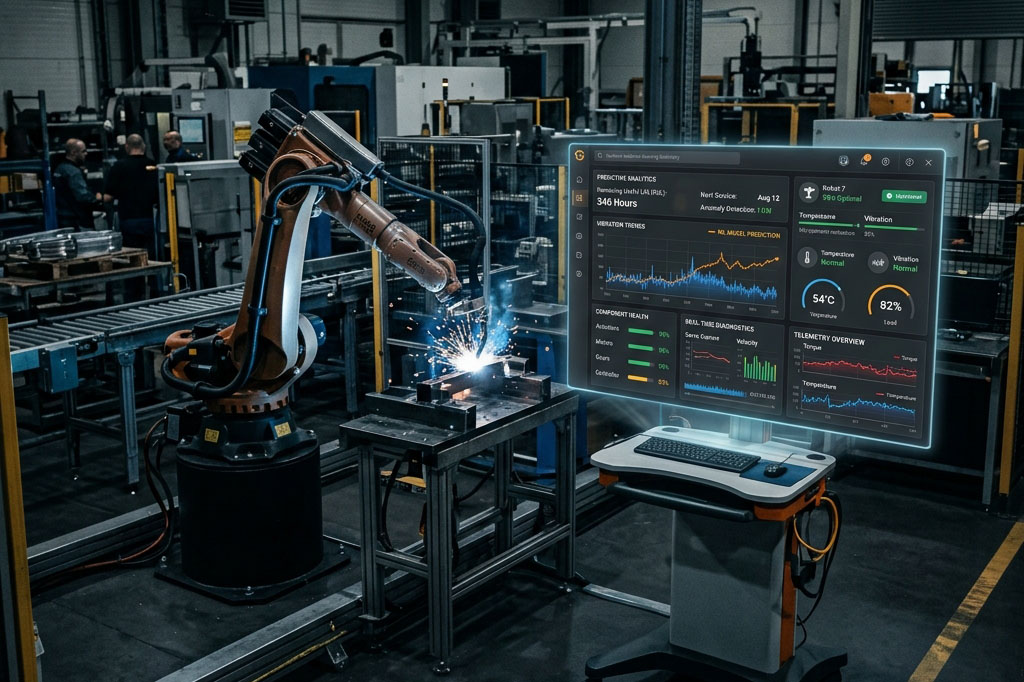
This creates opportunities for more proactive operations. For example, predictive maintenance software can identify unusual equipment behavior before a breakdown occurs. Instead of waiting for a failure, maintenance teams receive early warning indicators. This helps reduce downtime and improve asset reliability. However, predictive insights only create value when organizations have systems in place to act on them. Visibility remains the foundation.
The Difference Between Automation and Operational Intelligence
Many organizations mistakenly view automation as the ultimate goal. In reality, automation is only one component of operational excellence. Operational intelligence requires organizations to answer critical questions:
- Which issues remain unresolved?
- Who owns each corrective action?
- Which assets present the highest operational risk?
- Which inspections are overdue?
- Where are recurring failures occurring?
- Which work orders are delayed?
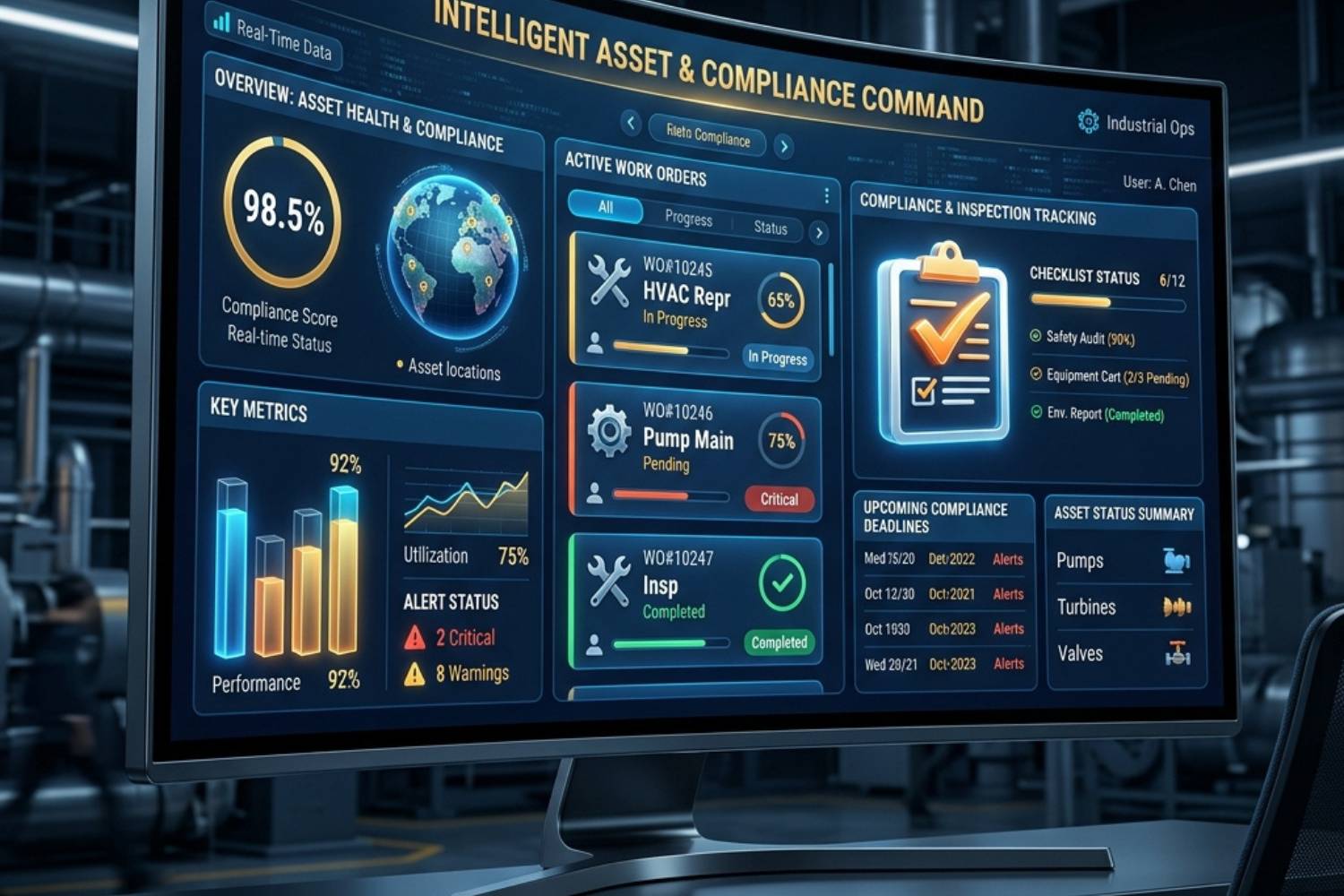
- What compliance activities require attention?
Automation helps generate information. Operational intelligence helps organizations act on it. The most successful manufacturers combine both.
A Typical Visibility Breakdown
Consider another common scenario. A machine vision system detects recurring weld inconsistencies. A automated inspection report is generated. A maintenance request is automatically created. The maintenance team receives a notification. Production continues.
Three weeks later: the work order remains open, the issue has not been prioritized, quality concerns continue increasing, scrap rates rise, and customer complaints begin appearing.
The problem was never a lack of technology. The problem was limited visibility into ownership and resolution. This is where many manufacturing organizations experience operational friction.
The Growing Importance of Connected Manufacturing Workflows
As manufacturing operations become increasingly digital, organizations need more than standalone automation tools. They need connected operational ecosystems. This includes:
- Industrial automation software
- Enterprise automation software
- Asset management systems
- Maintenance management software
- Compliance management software
- Digital inspection software
- Automated work order software
- Smart factory software
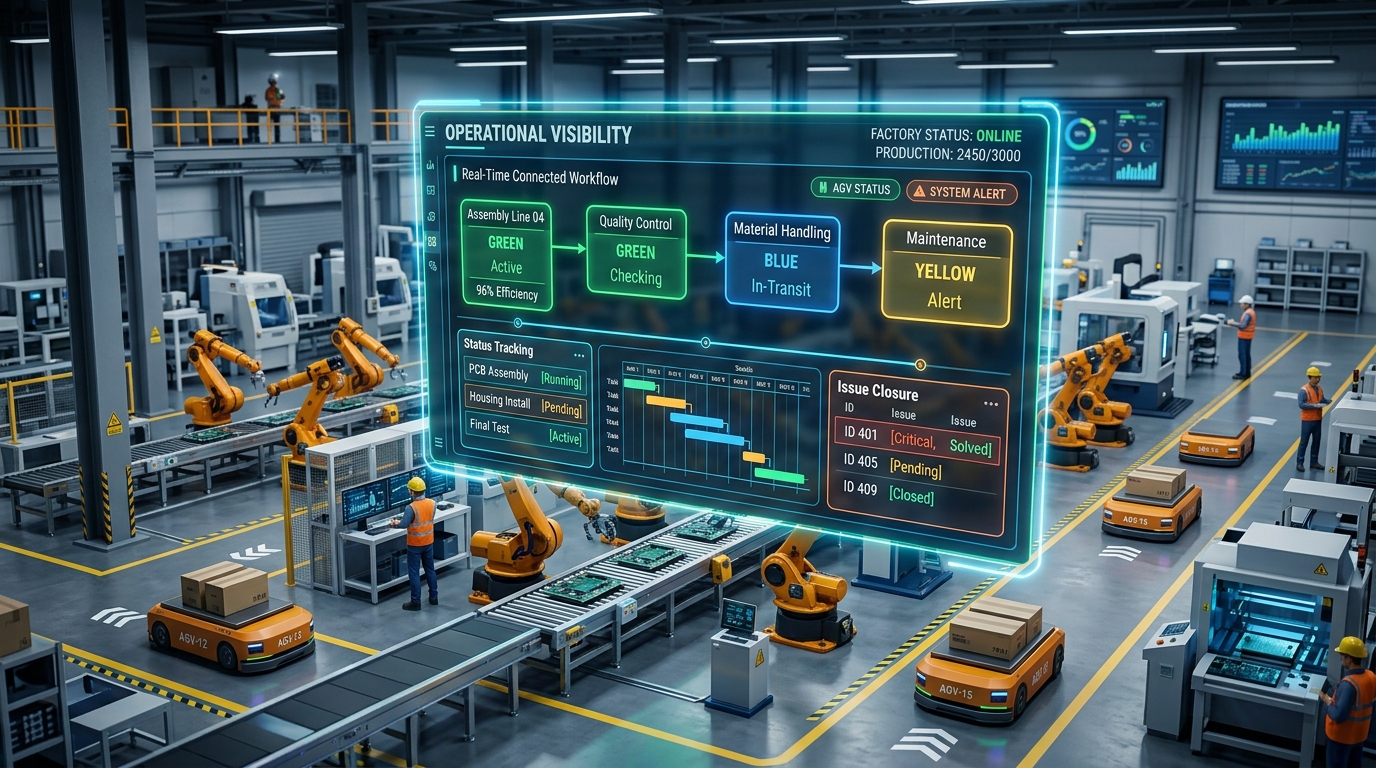
When these systems operate independently, visibility suffers. When they operate together, organizations gain a clearer understanding of operational performance. Connected workflows help teams move from identifying issues to resolving them.
Beyond Automation: Connecting Operational Workflows
Automation is valuable. Machine vision is valuable. Artificial intelligence is valuable. But none of these technologies eliminate the need for operational visibility.
At Zamorins Solutions, we help organizations connect inspections, asset management, work orders, compliance tracking, and operational reporting into a unified operational workflow. Because identifying issues is only the first step. The real value comes from ensuring every issue remains visible until it is resolved.
Organizations that improve operational visibility often experience:
- Faster issue closure
- Improved maintenance coordination
- Better compliance readiness
- Reduced downtime
- Stronger accountability
- More effective resource allocation
- Improved operational decision-making
These outcomes are rarely achieved through automation alone. They are achieved through connected workflows and consistent visibility.
| Traditional Fragmented Automation | Connected Operational Visibility |
|---|---|
| Siloed software systems (RPA, AI, & Vision isolated) | Unified operational workflow connecting all data |
| Manual checklists and spreadsheet tracking | Automated issue alerts and digital tracking boards |
| Delayed communication across departments | Real-time notifications and task assignments |
| Stressful and time-consuming manual audit prep | Continuous audit readiness with digital logs |
| Downtime due to delayed corrective actions | Faster issue resolution and closed-loop processes |
The Future of Manufacturing Is Connected Visibility
The next phase of manufacturing transformation will not be defined solely by robots, AI, or machine vision. It will be defined by how effectively organizations connect operational information.
Factories already generate enormous amounts of data. The competitive advantage comes from turning that data into action. Organizations that create visibility across inspections, maintenance, compliance, assets, and corrective actions will make faster decisions and respond more effectively to operational challenges.
Technology will continue evolving. Automation will become more sophisticated. Machine learning will become more accurate. But the manufacturers that outperform competitors will be the ones that maintain visibility from issue identification through issue closure.
Conclusion
Robotics process automation in software development, machine vision systems, artificial intelligence, and industrial automation software are reshaping modern manufacturing. Yet technology alone does not improve operational performance.
Many manufacturing challenges occur not because organizations lack automation, but because they lack visibility across critical workflows. Inspections identify issues. Automation generates actions. Machine vision detects defects. AI predicts risks. But operational performance improves only when organizations can track ownership, corrective actions, maintenance activities, and issue resolution from start to finish.
The future of manufacturing belongs to organizations that connect information, improve visibility, and ensure that every operational issue remains visible until it is resolved. Because automation identifies problems. Visibility ensures they get solved.
Ready to Connect Your Manufacturing Workflows?
If your organization is still struggling to bridge the gap between automation and actual issue resolution, it's time to build true operational visibility.
At Zamorins Solutions, we help manufacturers tie inspections, assets, work orders, maintenance, and compliance into a unified visibility platform that drives performance and ensures issue closure. 👉 Visit www.zamorinstech.com to learn more or Contact Us today!
Frequently Asked Questions
1. What is robotics process automation in software development?
Robotics process automation in software development uses software bots to automate repetitive digital tasks such as reporting, workflow management, compliance documentation, maintenance requests, and system integrations.
2. How does machine vision improve manufacturing operations?
Machine vision uses cameras and computer vision algorithms to inspect products, detect defects, verify dimensions, and improve quality control with consistent accuracy.
3. Can RPA and machine vision work together?
Yes. Machine vision identifies issues, while RPA can automatically trigger maintenance requests, corrective actions, notifications, and reporting workflows.
4. Why do manufacturing issues remain unresolved despite automation?
Many organizations automate processes but lack visibility across workflows. Issues may be identified quickly but remain unresolved due to ownership gaps, disconnected systems, or limited follow-up visibility.
5. What is the difference between automation and operational visibility?
Automation performs tasks automatically. Operational visibility allows organizations to track issues, ownership, corrective actions, compliance activities, and resolution status across departments.
6. How does AI support manufacturing operations?
AI analyzes operational data to predict failures, identify trends, improve maintenance planning, detect anomalies, and support data-driven decision-making.
7. What are the benefits of connected operational workflows?
Connected workflows improve issue tracking, maintenance coordination, compliance readiness, accountability, operational visibility, and decision-making while reducing downtime and operational delays.
8. How does Zamorins Solutions support manufacturing operations?
Zamorins Solutions helps organizations connect inspections, assets, work orders, maintenance activities, compliance workflows, and operational reporting into a unified visibility platform that supports faster issue resolution and stronger operational control.