How AI-Powered Predictive Maintenance Software Is Transforming Manufacturing
Manufacturing doesn't lose money when machines fail.
It loses money long before they fail.
A motor begins running hotter than normal. A bearing vibrates slightly more than it did last week. An air compressor draws more current than usual. None of these signals stop production immediately, so operations continue. Weeks later, an unexpected failure shuts down an entire production line.
Maintenance is called, production schedules slip, and customer deliveries are delayed. Everyone asks the same question: "Why didn't we see this coming?"
In many facilities, the warning signs were already there. The problem wasn't a lack of data; it was a lack of visibility. That is exactly why predictive maintenance software has become one of the fastest-growing investments in modern manufacturing.
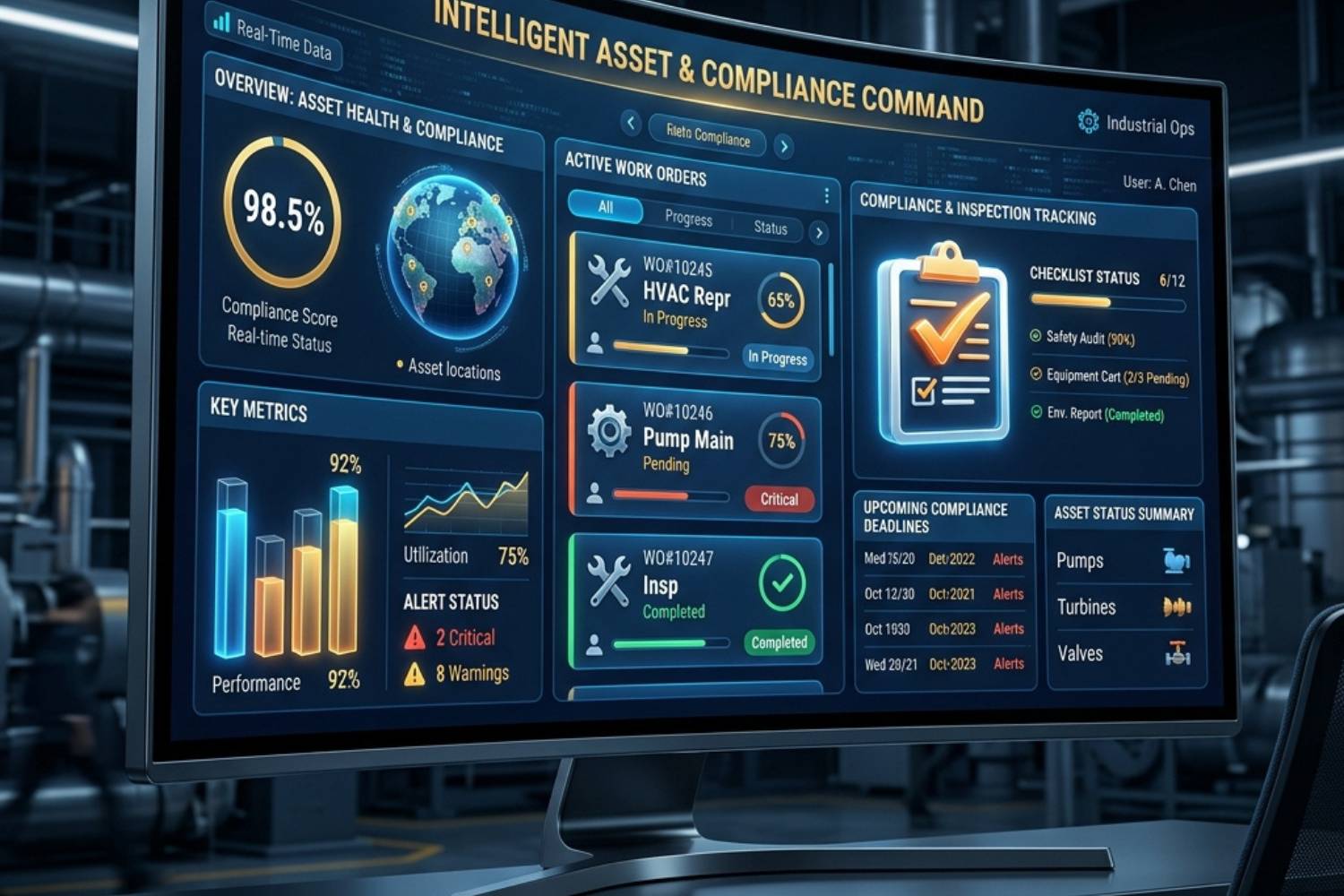
Powered by artificial intelligence in manufacturing, connected equipment, Industrial IoT, and advanced analytics, today's manufacturers can detect developing equipment problems before they become expensive operational disruptions.
The organizations gaining the biggest competitive advantage aren't repairing machines faster. They're preventing failures from happening in the first place.
The Shift From Scheduled Maintenance to Intelligent Maintenance
For decades, manufacturers have relied on two familiar maintenance models:
- Reactive maintenance: Fix equipment after it fails.
- Preventive maintenance: Replace components according to a fixed schedule.
Both approaches work—but both have limitations. Reactive maintenance creates unexpected downtime and costly production interruptions. Preventive maintenance reduces failures but often replaces parts that still have useful life, increasing labor and maintenance costs.
Today's manufacturers are adopting a third approach. Predictive maintenance software uses real-time equipment data, AI models, and machine learning to determine when maintenance is actually required.
Instead of asking, "When should we service this machine?", operations leaders can ask, "What is this machine telling us today?"
This shift is made possible through advances in AI in manufacturing, Industrial IoT, cloud computing, and industrial analytics that continuously evaluate equipment health.
The Real Operational Challenge Isn't Equipment
It's Visibility
Modern manufacturing facilities generate massive amounts of operational information every minute. This includes data on:
- Temperature
- Vibration
- Motor current
- Pressure
- Runtime
- Cycle counts
- Lubrication history
- Energy consumption
Most organizations already collect this data, but very few turn it into actionable decisions. Instead, information remains scattered across PLCs, SCADA systems, spreadsheets, CMMS platforms, maintenance logs, and technician notes. Maintenance teams continue following calendar-based schedules because connecting all of this information manually is nearly impossible.
The result of this lack of visibility includes:
- Unexpected production interruptions
- Higher maintenance costs
- Reduced asset lifespan
- Emergency repair expenses
- Lost production capacity
- Missed delivery commitments
The issue isn't missing data. It's missing operational intelligence.
How AI Makes Predictive Maintenance Smarter
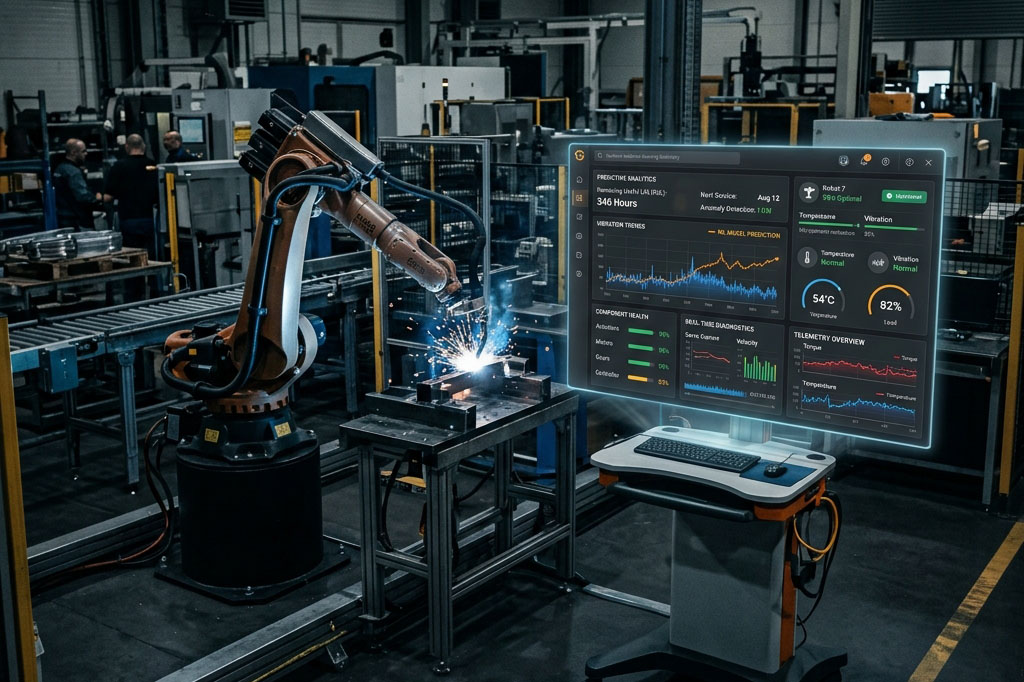
Modern predictive maintenance software continuously monitors connected assets using Industrial IoT sensors, PLCs, SCADA systems, and equipment telemetry. Using industrial artificial intelligence, the platform compares current operating behavior with historical performance. Tiny deviations that would normally go unnoticed become early warning signals.
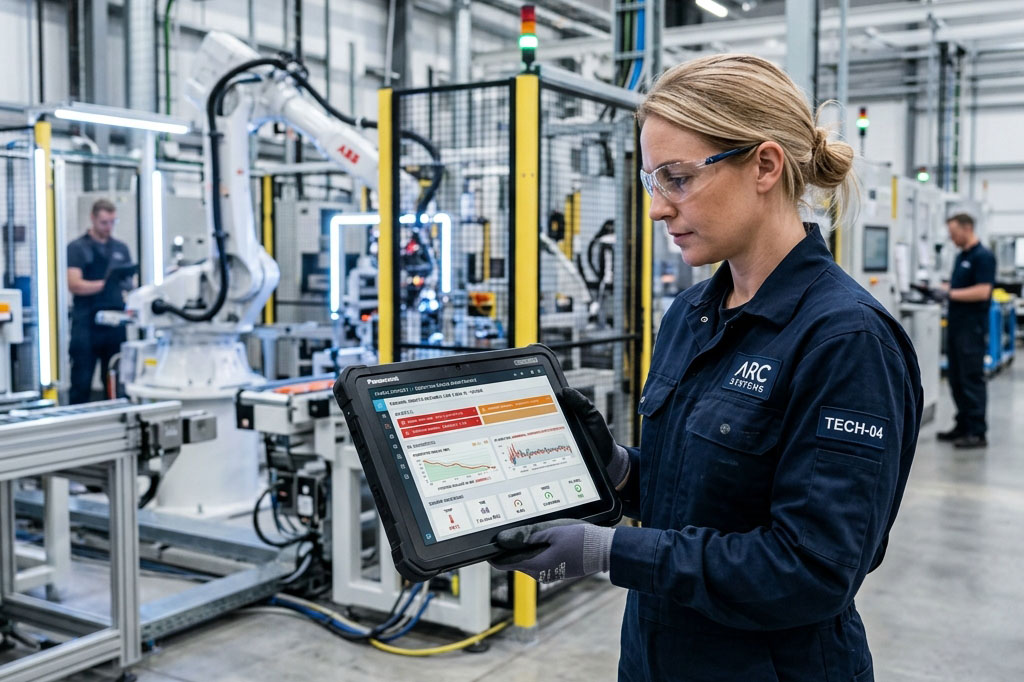
Imagine a conveyor motor that begins vibrating only 3% more than its historical average. No technician would likely identify that during a routine inspection. AI, however, recognizes the pattern immediately. Based on thousands of previous operating cycles, it predicts accelerated bearing wear. Maintenance receives an alert, repairs are scheduled during planned downtime, and production continues uninterrupted.
This is one of the most practical examples of AI and manufacturing working together—not replacing maintenance professionals, but helping them make better decisions sooner.
A Real-World Manufacturing Scenario
Imagine a food processing facility operating twenty packaging lines across three shifts. Historically, every machine followed the same maintenance calendar. Some machines received unnecessary servicing, while others developed problems weeks before their scheduled maintenance window.
After implementing maintenance PM software with predictive AI capabilities:
- Machine health is monitored continuously.
- Maintenance schedules become condition-based.
- Critical assets receive higher priority.
- Spare parts planning becomes more accurate.
- Unexpected failures decline significantly.
- Maintenance labor is allocated where it delivers the highest operational value.
Rather than treating every machine the same, maintenance becomes intelligent, targeted, and data-driven.
Why Many Predictive Maintenance Initiatives Fail
Technology alone doesn't create operational improvement. Many manufacturers struggle because they continue relying on outdated workflows. Common challenges include:
- Calendar-based maintenance replacing condition-based planning
- Maintenance histories stored in disconnected spreadsheets
- Limited visibility across multiple production facilities
- Equipment data collected but rarely analyzed
- Maintenance and production teams working in separate systems
- Digital transformation projects implemented without operational alignment
These aren't technology problems. They're workflow and visibility problems.
Why Predictive Maintenance Matters
The value extends far beyond preventing equipment failures. Organizations using predictive maintenance software often achieve:
- Reduced unplanned downtime
- Lower maintenance costs
- Higher Overall Equipment Effectiveness (OEE)
- Longer equipment lifespan
- Better production planning
- Improved maintenance productivity
- Stronger workplace safety
- Greater operational visibility
Predictive maintenance is no longer simply a maintenance initiative. It has become a business strategy that directly supports profitability, operational resilience, and customer satisfaction.
Best Practices for Successful Implementation
Manufacturers seeing the strongest results approach predictive maintenance as part of a broader digital transformation strategy. Key best practices include:
- Connect critical equipment through Industrial IoT sensors.
- Capture accurate operational data from every production asset.
- Prioritize maintenance based on asset criticality rather than fixed schedules.
- Integrate maintenance workflows with ERP and MES platforms.
- Replace manual reporting with AI-driven analytics.
- Monitor KPIs through real-time operational dashboards.
- Continuously refine AI models using actual production data.
Organizations combining AI in manufacturing with connected maintenance workflows build a stronger foundation for long-term operational excellence.
How Zamorins Solutions Helps Manufacturers
Technology delivers value only when it fits the way operations actually work. At Zamorins Solutions, we help manufacturers modernize maintenance operations through intelligent digital platforms built for connected factories.
Our solutions help organizations:
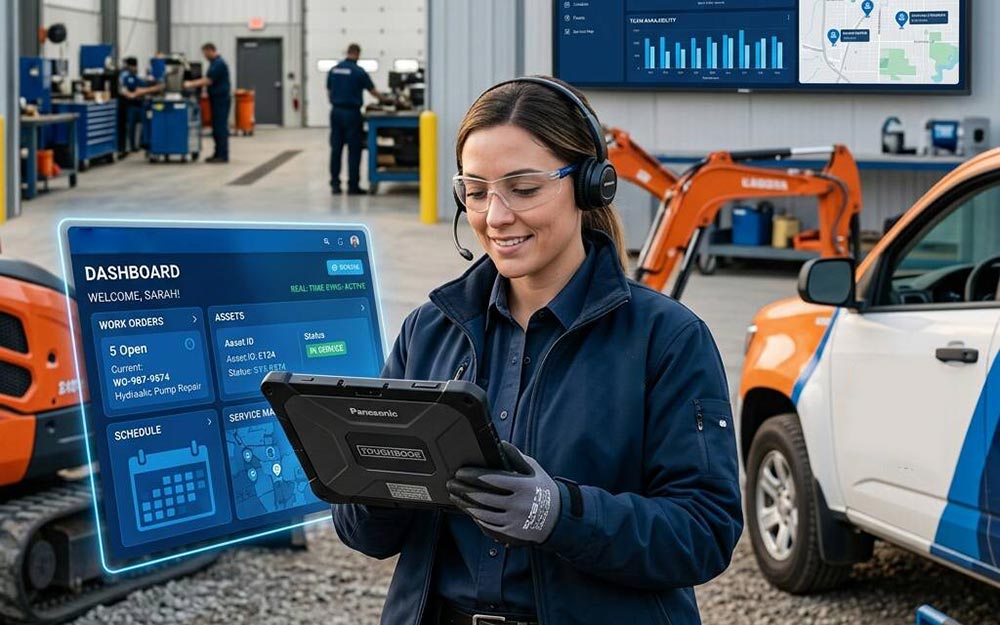
- Monitor equipment performance in real time
- Digitize inspections and maintenance workflows
- Track asset health across multiple facilities
- Automate maintenance scheduling
- Improve operational visibility through centralized dashboards
- Support predictive decision-making using AI-powered insights
Instead of reacting to equipment failures, maintenance teams gain the visibility needed to prevent disruptions before production is affected.
Before vs. After Predictive Maintenance
| Before | After |
|---|---|
| Fixed maintenance schedules | Condition-based maintenance |
| Unexpected equipment failures | Early issue detection |
| Manual spreadsheets | Real-time digital visibility |
| Reactive repairs | Planned maintenance activities |
| Higher downtime | Increased equipment availability |
| Limited operational insights | AI-driven maintenance decisions |
The Future of Manufacturing Is Predictive
Manufacturing competitiveness increasingly depends on one capability: making decisions before problems become disruptions. As artificial intelligence in manufacturing continues to evolve, maintenance will become more predictive, connected, and autonomous.
The manufacturers that gain the greatest advantage won't necessarily have the newest equipment. They'll have the best visibility into how that equipment is performing. Predictive maintenance doesn't replace experienced maintenance professionals. It gives them earlier insights, better context, and greater confidence in every maintenance decision.
Conclusion
Unexpected equipment failures are rarely sudden. Most develop gradually through small operational changes that traditional maintenance programs fail to detect. Predictive maintenance software enables manufacturers to move beyond reactive repairs and time-based servicing toward intelligent, condition-based maintenance powered by AI.
The goal isn't simply to reduce downtime. It's to create more reliable production, stronger operational performance, and smarter business decisions. For manufacturers planning their next phase of digital transformation, predictive maintenance is no longer an emerging technology. It's becoming a competitive necessity.
Ready to Modernize Your Manufacturing Operations?
If your organization is still relying on fixed maintenance schedules, disconnected spreadsheets, or reactive repairs, now is the time to rethink your maintenance strategy.
At Zamorins Solutions, we help manufacturers implement intelligent maintenance platforms that combine AI in manufacturing, connected inspections, asset management, and real-time operational visibility.
Discover how predictive maintenance can reduce downtime, improve equipment reliability, and support smarter manufacturing decisions across every facility. 👉 Visit www.zamorinstech.com to learn more or Contact Us today!
FAQs
1. What is predictive maintenance software for manufacturing?
Predictive maintenance software uses real-time equipment data, Industrial IoT sensors, and AI/machine learning models to predict when a machine is likely to fail, allowing maintenance to be scheduled proactively before unexpected downtime occurs.
2. How does AI improve predictive maintenance?
AI and machine learning models analyze massive streams of sensor data (such as vibration, temperature, and current) to detect tiny anomalies or patterns that human operators might miss, predicting equipment failures weeks in advance.
3. What is the difference between preventive and predictive maintenance?
Preventive maintenance is calendar- or schedule-based (e.g., changing a part every 6 months regardless of its condition), which can replace functional parts too early. Predictive maintenance is condition-based, performing service only when real-time data indicates a component is wearing out.
4. What data is collected by predictive maintenance systems?
Systems collect telemetry data including vibration levels, operating temperatures, motor current draw, pressure, run time, cycle counts, lubrication logs, and energy consumption.
5. Why do some predictive maintenance initiatives fail?
Many initiatives fail due to outdated workflows, data siloed in spreadsheets, lack of operational alignment between maintenance and production teams, or failing to integrate alerts into daily maintenance workflows.