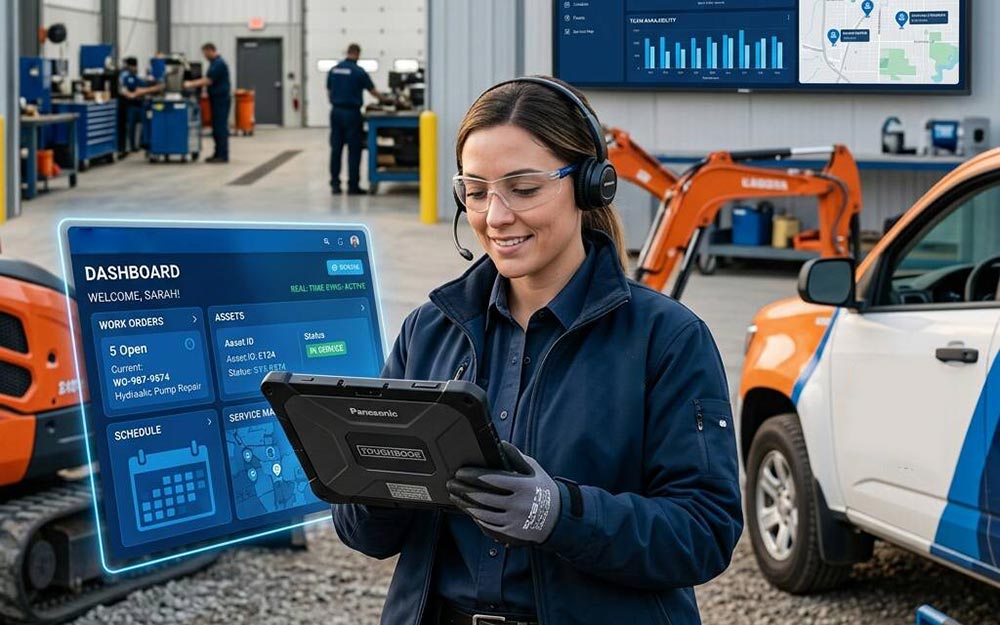
Why Field Service Operations Break, and How Real-Time Visibility Fixes It
Most operational inefficiencies don’t start with major, catastrophic failures. They start with small, seemingly negligible delays that quietly compound over time.
A technician arrives at a job site without the full client history. An inspection checklist is filled out on paper and updated in the system hours later. An urgent work order sits unassigned in an inbox. Project ownership becomes unclear. Individually, these gaps seem small and manageable. Together, they form an operational bottleneck that slows down the entire business. That’s exactly where organizational efficiency breaks, leading to rising overheads and unhappy clients.
In highly competitive environments across the USA, establishing unified and visible workflows is no longer a luxury. Organizations must embrace modern field service management software to connect field data, back-office managers, and critical assets under a single operational view.
The Real Problem Is Not Activity
Across manufacturing, utilities, facilities management, logistics, and heavy infrastructure operations, work is constantly happening. Technicians are out in the field. Inspections are being completed. Tasks are assigned, and issues are reported daily.
But true efficiency doesn’t depend on sheer activity. It depends on real-time visibility. Unfortunately, that’s where most traditional operations fail. Without comprehensive service management software running behind the scenes, high-volume activity simply masks deeper operational blockages, resulting in double-handling of data, repetitive site visits, and massive information gaps.
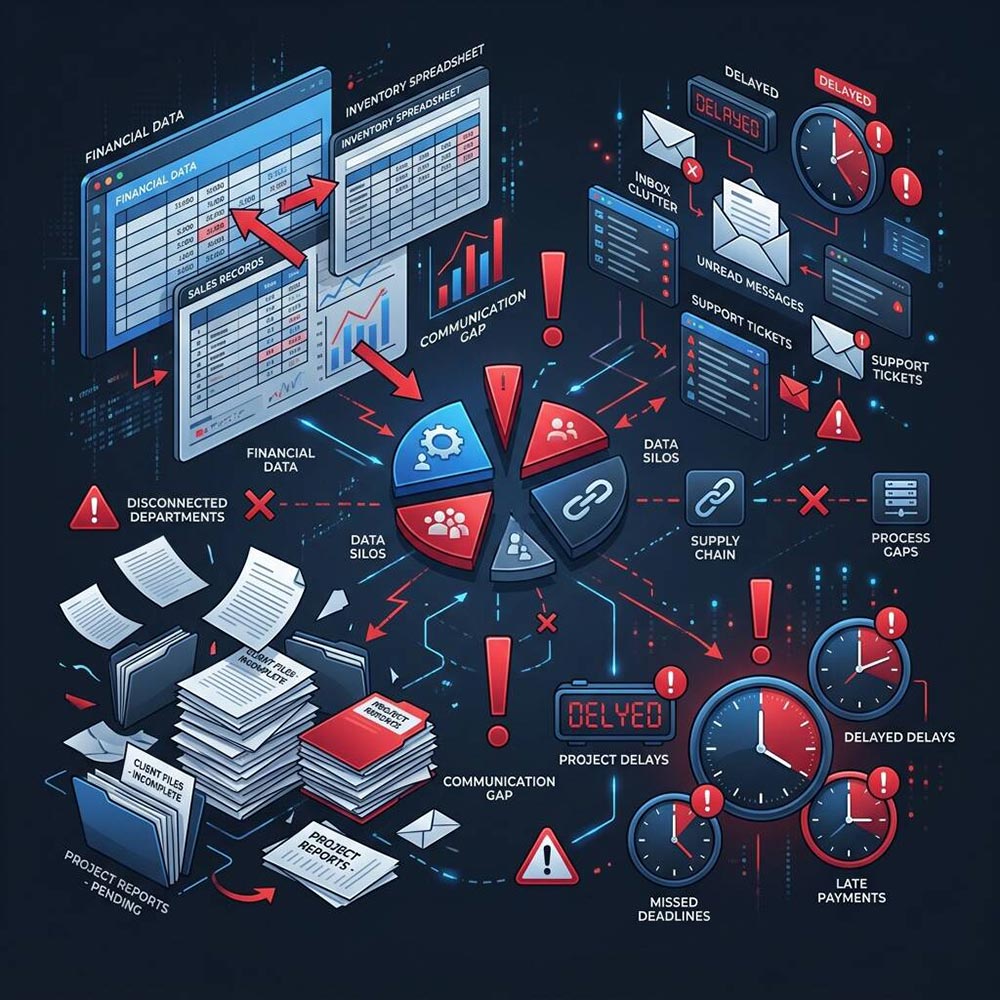
Where Field Operations Lose Efficiency
1. Field Updates Are Delayed
Technicians complete their tasks, but the actual status updates happen hours or even days later. Decisions are routinely made on outdated information, leading to scheduling conflicts and missed response windows.
2. Work Orders Lose Momentum
An critical issue is identified during an inspection, but assignment, routing, and tracking slow down. Because of the disconnected nature of manual processes, closure takes far longer than clients expect.
3. Systems Stay Disconnected
Spreadsheets, emails, and paper logs dominate. Data exists, but not in one place. Using multiple fragmented field service software tools that don't communicate with each other keeps information siloed.
4. Asset Visibility Is Incomplete
Asset history is technically available in a folder somewhere, but it's not accessible to the technician in real time. Without access to historical trends on-site via field management software, tracking and fixing repeat failures becomes impossible.
5. Compliance Becomes Reactive
Compliance records are scattered across regional offices. Audit preparation turns into a frantic, manual scramble. The pressure builds on field managers as deadlines approach.
Operational Check (Save-Worthy)
Ask your operational team these three critical questions today:
- Can you see the live status of all open work orders right now?
- Can field teams update job statuses instantly from their mobile devices?
- Can managers make split-second dispatching decisions using real-time data?
If the answer to any of these is "no," operational inefficiency is already built into your daily workflow.
Compounding Business Consequences
These gaps don’t stay operational. They quickly ripple outward to create serious bottom-line consequences for businesses managing distributed teams, complex assets, and heavy regulatory pressure:
- Slower response times: Slower dispatches lead to prolonged service outages.
- Increased asset downtime: Delayed maintenance results in equipment breaking down longer.
- Higher operational costs: Truck rolls are wasted on repeat visits due to missing context.
- Compliance risk: Heavy penalties occur when safety certifications can't be retrieved instantly.
- Accountability breakdown: No clear records exist showing who owned a work order at any given time.
By shifting to comprehensive field service management platforms, companies can protect themselves from these risks and build a resilient operating model.
Operational Insight
"This is not a workforce problem. This is not an effort problem. This is a workflow visibility problem. When inspections, work orders, and asset data are disconnected: Operations slow down."
What Actually Improves Efficiency
Efficiency improves dramatically when workflows are connected. When you deploy modern field management apps, you bridge the physical and digital gap, ensuring that:
- Field data moves instantly from the site to the cloud dashboard.
- Work orders are immediately visible to schedulers and technicians.
- Job ownership is crystal clear at every step of the ticket lifecycle.
- Task progress is fully trackable from inception to resolution.
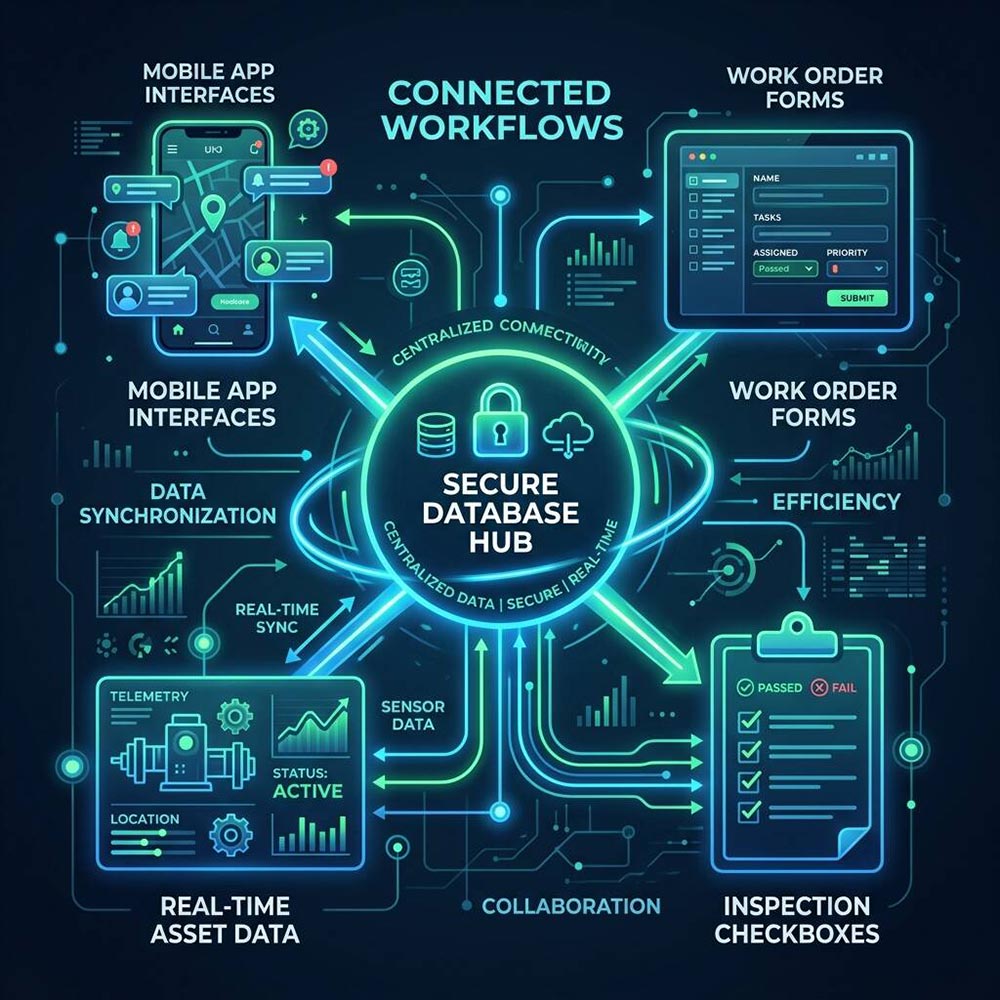
How Modern Field Service Management Software Works
A high-performing field service management software acts as the central nervous system for your physical operations. It integrates five critical pillars into one unified system:
- Inspections: Smart mobile checklists with offline support, image capture, and GPS tags.
- Work Orders: Automated scheduling, dynamic dispatch, and intelligent routing based on location and skills.
- Assets: Comprehensive maintenance logs, warranty data, and historical records accessible on-site.
- Field Teams: Real-time messaging, status updates, and turn-by-turn navigation.
- Maintenance Workflows: Automated triggers that convert failed inspections into actionable service orders.
Where Zamorins Solutions Inc Fits
Most field systems in the market excel at simply tracking activity. Zamorins Solutions Inc focuses on what happens in the critical gaps between reporting and closure—because that’s precisely where operational inefficiency builds up.
Zamorins connects inspections, asset data, work orders, and field operations into one operational workflow. We build custom, highly secure web-based dashboards and native mobile applications tailored to your specific field processes. So your teams don’t just record work—they complete it faster with zero administration delays.
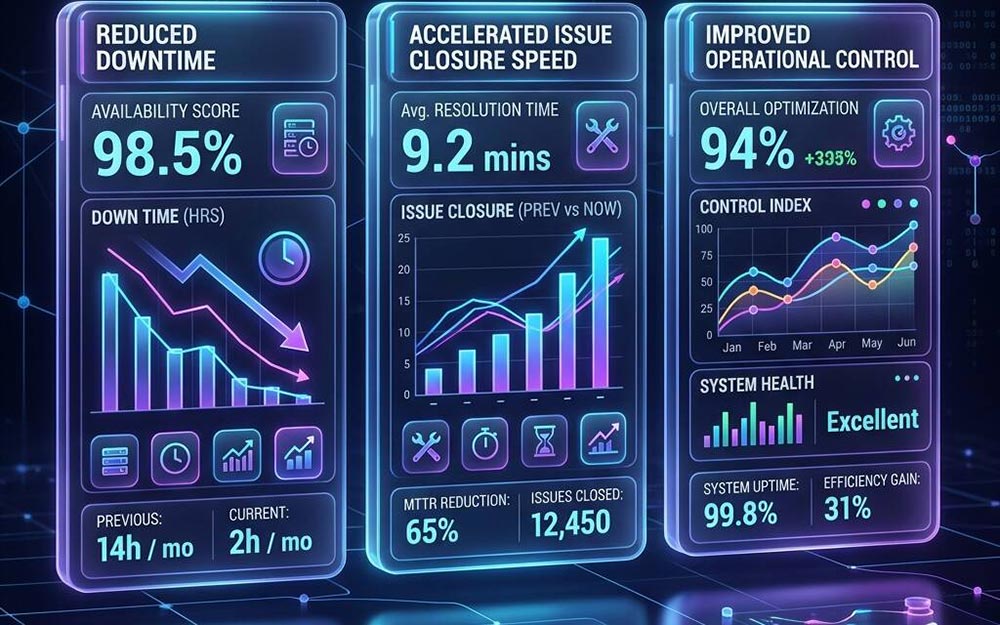
Outcomes & Strategic Shift
When workflows are connected, the outcomes speak for themselves:
- Faster Issue Closure: Turnaround times drop as automated routing takes over manual scheduling.
- Better Field Visibility: Schedulers see exactly where technicians are and their current capacity.
- Reduced Downtime: Preventative checks are triggered on time, keeping equipment running at peak performance.
Strategic Shift: Operational efficiency is no longer optional. Organizations managing complex assets and distributed field teams need this level of visibility to scale successfully in today's economy.
Final Thought: Efficiency is not about doing more work or exerting more effort. It’s about seeing clearly. If operations lack visibility, they slow down automatically. Visibility is not reporting; visibility is control.
Ready to eliminate operational inefficiencies?
If your operations still rely on spreadsheets, delayed updates, and disconnected systems — the issue is not effort. It’s visibility.
Explore how Zamorins Solutions Inc helps improve field operations through connected workflows.
Book a DemoFrequently Asked Questions
1. What is field service management software?
It is an integrated digital platform that helps manage facility inspections, mobile field teams, preventative maintenance, work orders, and physical assets in real time, connecting the back-office with field operations.
2. How does it improve operational efficiency?
By connecting workflows, automating dispatch routing, enabling instant updates from mobile devices, and eliminating time-consuming paper administration or manual spreadsheet data entry.
3. Which industries benefit most?
Manufacturing, utilities, logistics, construction, infrastructure development, telecommunications, and facilities management companies experiencing distributed team coordination issues.
4. Why is real-time visibility important?
Because relying on delayed, batch-processed information leads to poor routing decisions, scheduling conflicts, extended asset downtime, and an inability to track SLA compliance.
5. What makes modern field software different?
Modern platforms connect the entire task lifecycle. Instead of just documenting that an inspection took place, it automatically routes failed checks into corrective work orders and syncs the service data to asset histories.